Concept
The Component Data Model: six domains that keep a data strategy focused
A data strategy that tries to cover everything at once usually covers nothing well. The Component Data Model is how we keep a data organisation's scope honest, one domain at a time.
How it’s structured
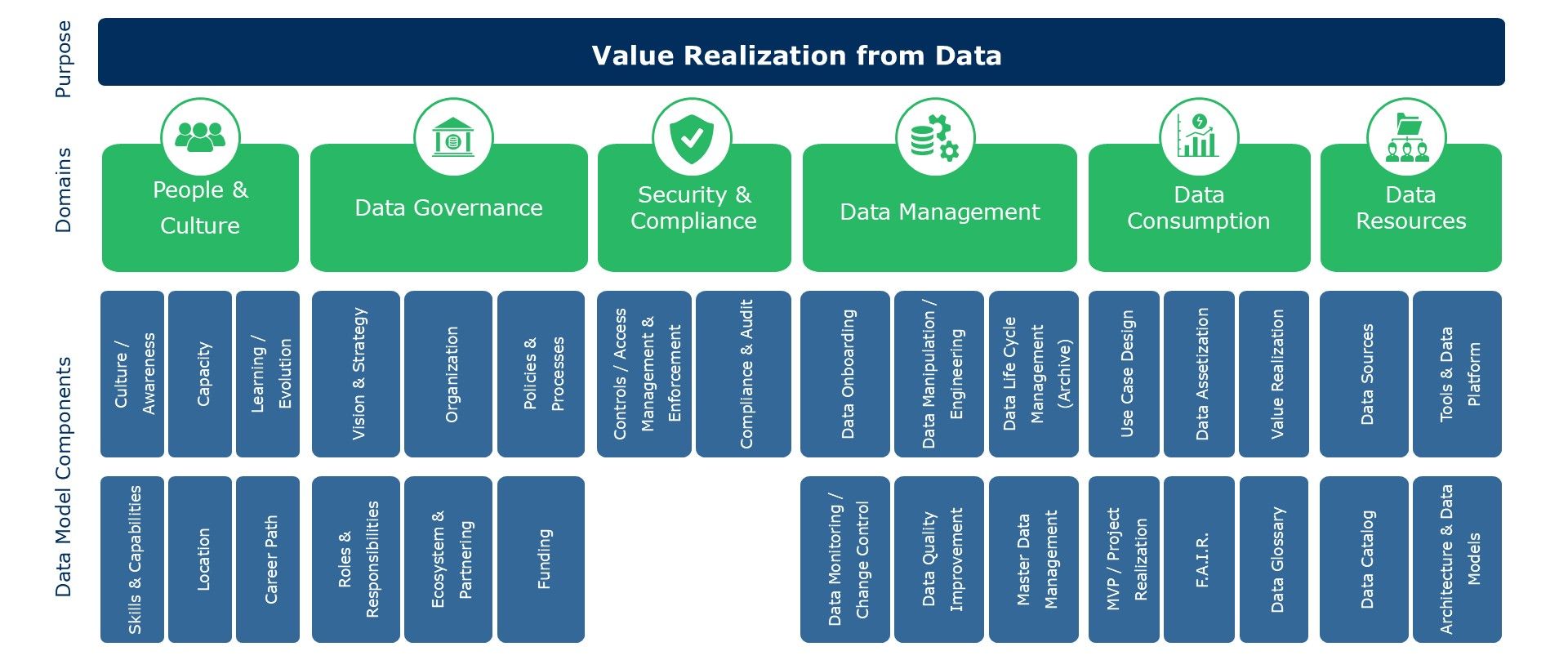
Six domains sit beneath a single shared purpose: value realisation from data. People & Culture and Data Governance cover the organisational foundation: skills, roles, funding, vision. Security & Compliance covers controls, access management and audit. Data Management and Data Consumption cover the practical lifecycle, from onboarding and engineering through to use-case design and value realisation. Data Resources covers the underlying sources, tools and architecture everything else depends on. Each domain breaks down further into named components, so a gap in, say, data quality improvement or master data management has a specific, addressable home rather than getting lost inside a vague “data management” catch-all.
Where we use it
We use the Component Data Model to structure a data organisation assessment: walking a client through all six domains in turn surfaces exactly where the real gaps are, rather than the ones that happen to be loudest in the room. It also gives a roadmap a shared vocabulary once priorities are set, so “we’re investing in Data Governance this quarter” means the same specific thing to everyone involved.