Concept
The AF Framework: scoping an analytics function in nine steps
Before we recommend a single use case, we need a clear picture of what a client's analytics and data function looks like today, and what it needs to become. The AF Framework is one of the tools our team uses to get there quickly.
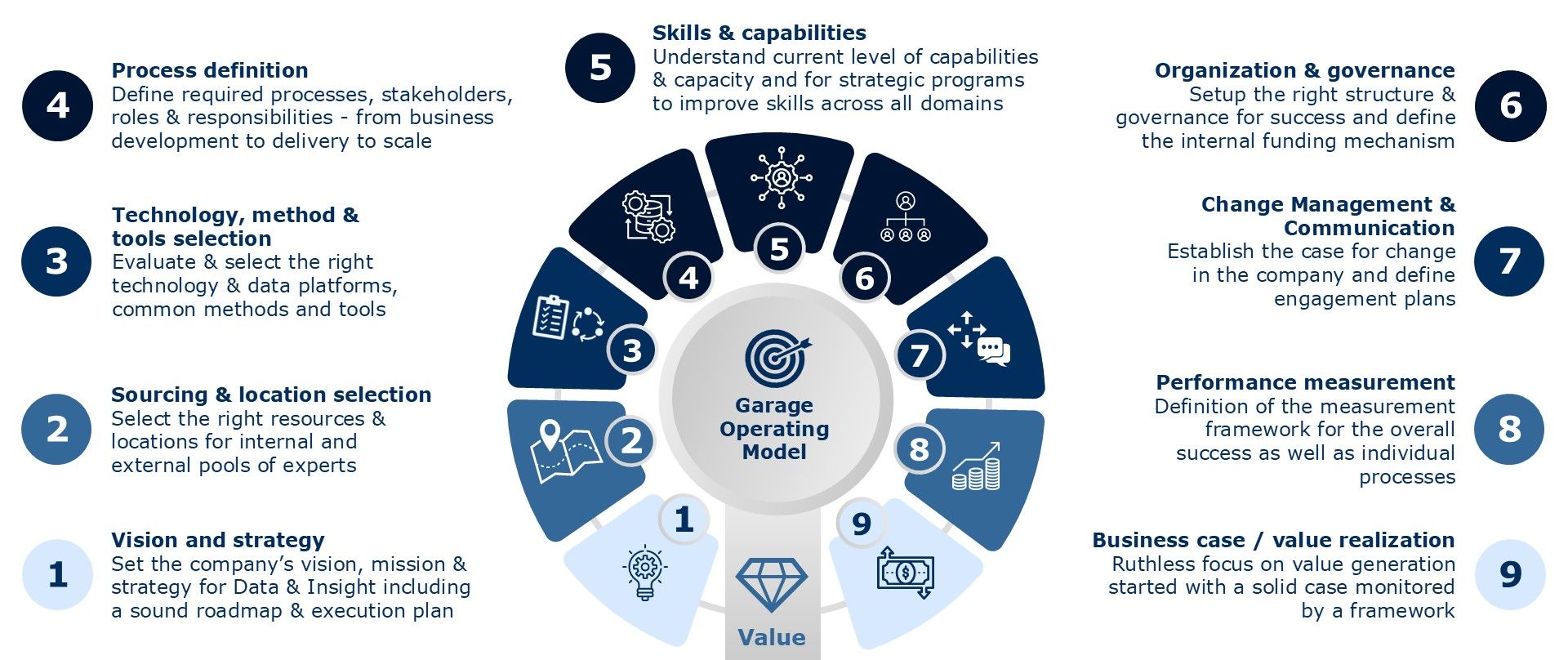
How it’s structured
The framework works through nine areas, arranged around a shared operating model at the centre. At each end sit the two anchors that keep the rest honest: vision and strategy first, so the scope is grounded in an actual mandate, and business case and value realisation last, so nothing gets scoped without a clear return in mind.
In between, the remaining seven areas split into two groups. Sourcing, technology and tooling, and performance measurement cover the practical building blocks: where capability comes from, what it runs on, and how success gets tracked. Process definition, skills and capabilities, organisation and governance, and change management cover the harder, people-facing work of making an analytics function actually function, day to day, across an organisation rather than inside a single team.
Working through all nine in a fixed order takes a fraction of the time a traditional maturity assessment does, because it forces the same structured conversation every time instead of starting from a blank page.
Where we use it
We bring the AF Framework into Drive for Clarity engagements, usually in the first working sessions with a client’s leadership team. It gives everyone in the room the same map to point at, which makes disagreements about priority a lot easier to have out loud instead of in separate meetings afterward.
It isn’t a deliverable we sell on its own. It’s one of several structured tools our team carries into an engagement to move faster from a vague ambition to a scoped, sequenced piece of work, the same way we’d bring domain expertise or a technical accelerator. Like everything else on this page, it exists to get to a decision faster, not to replace the judgement that has to sit behind it.